Mozarts Requiem steht seit jeher zwischen Fakt und Mythos.
Widersprüchliche Berichte über seine letzten Tage, ungelöste Fragen über Krankheit, Spekulationen über Vergiftung und das Unvollendetbleiben des Werkes — all dies erschuf ein Rätsel, das die Geschichte bis heute nicht entwirrt hat.
Diese fortbestehende Ungewissheit bildet die Brücke zu Fishmans eigener Erfahrung.
Sie kam im frühen Herbst nach Wien, um ihr Video-Art-Werk FEET zu sehen, das zu dieser Zeit in der Galerie gezeigt wurde.
Doch in der ersten Nacht in der Stadt, im Imperial Hotel, in dem einst Königin Elisabeth I. logierte und in dem Wagner mehrere Monate lebte, kam sie mit einer unbekannten Substanz in Kontakt.
Innerhalb von Sekunden reagierte ihr Körper:
Hautläsionen, brennende Schmerzen, und ein abruptes Zusammenbrechen des Schlafs.
Wochen später — selbst jetzt, während diese Zeilen geschrieben werden —
sind die Symptome weiterhin ohne Diagnose, ohne Lösung und ohne irgendeine Behandlung, die hilft.
Und die Schlaflosigkeit hält an.
Ein modernes Rätsel, das ein altes widerspiegelt.
Das Verblassen einer Muse — die wahre Achse von REQUIEM
Parallel zum körperlichen Zerfall erschien ein anderer, stillerer:
das Leiserwerden jener Muse, die Fishmans Werk in den vergangenen zwei Jahren getragen hatte.
In internationalen Porträts über sie verglichen Kritiker sie immer wieder mit der Welt der Romantik
mit Petrarcas Laura, jener unberührbaren Achse der Sehnsucht, die aus der Ferne erschafft.
Ihre Muse funktionierte immer auf diese Weise:
nicht als Metapher, sondern als innere Kraft — als Spannung aus Begehren, Unerreichbarkeit, Zurückhaltung und Verletzlichkeit.
Eine Präsenz, die ihre Gedichte, ihre Video-Art, ihre Malzyklen, ihre Performances und die von ihr gegründeten Lyrikabende prägte.
Ein Prinzip, das sie gleichzeitig erleuchtete und verwundete.
Doch während der Arbeit an REQUIEM begann diese Kraft zu verblassen.
Nicht zu verschwinden — sondern zu driften.
Ein fernes Licht, das langsamer eintrifft, schwerer zu erreichen ist.
Und wenn eine Muse schwächer wird, tritt die Kunst in einen Grenzraum ein.
Darin liegt der emotionale Kern der Ausstellung:
REQUIEM handelt nicht von Mozarts Tod – sondern vom möglichen Tod jener inneren Kraft, die sie einst getragen hat.
Zwischen Mozart und Bach — die öffentliche Geschichte und die geheime Wahrheit
Obwohl die äußere Erzählung um Mozart kreist, wenden sich die Werke selbst Bach zu.
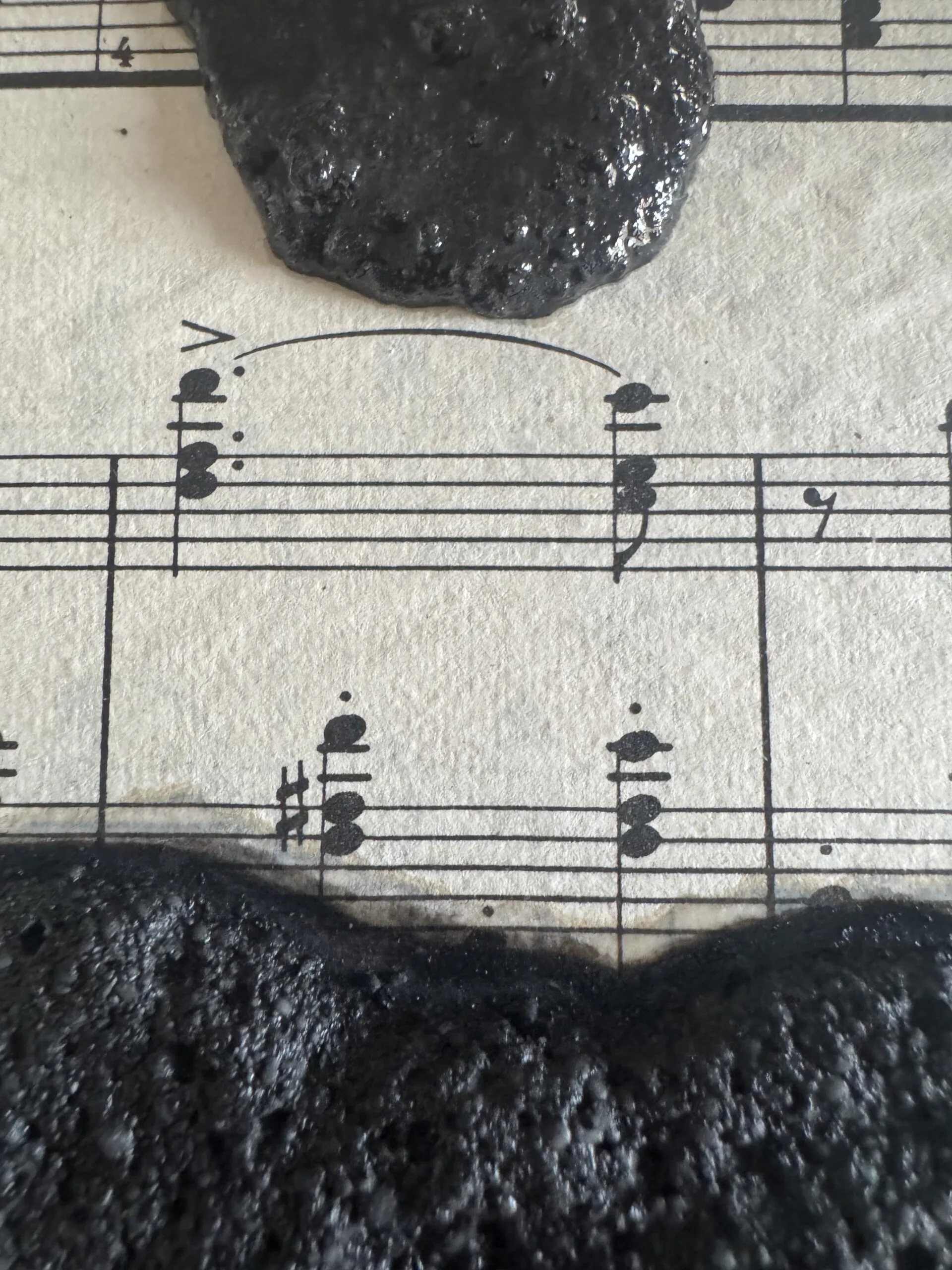
Jedes Stück ist auf Partituren von Bach gemalt —
Kindheitsblätter, die sie seit ihren frühen Klavierstunden als junges Mädchen aufbewahrt hat.
Nicht aus Nostalgie, sondern aus Treue zu dem, was für sie wahr ist.
Mozart ist die Figur, die die Welt erwartet.
Bach ist die Figur, die sie liebt — die sie im Innersten trägt.
Dies ist ihr verborgenes Geständnis.
Ihre Arbeiten hängen unter dem Namen Mozarts,
doch erschaffen wurden sie auf Bachs Musik —
eine intime Geste, die man nur durch diese Zeilen erahnt.
Die schwarze Substanz — kein Material, sondern Verhalten
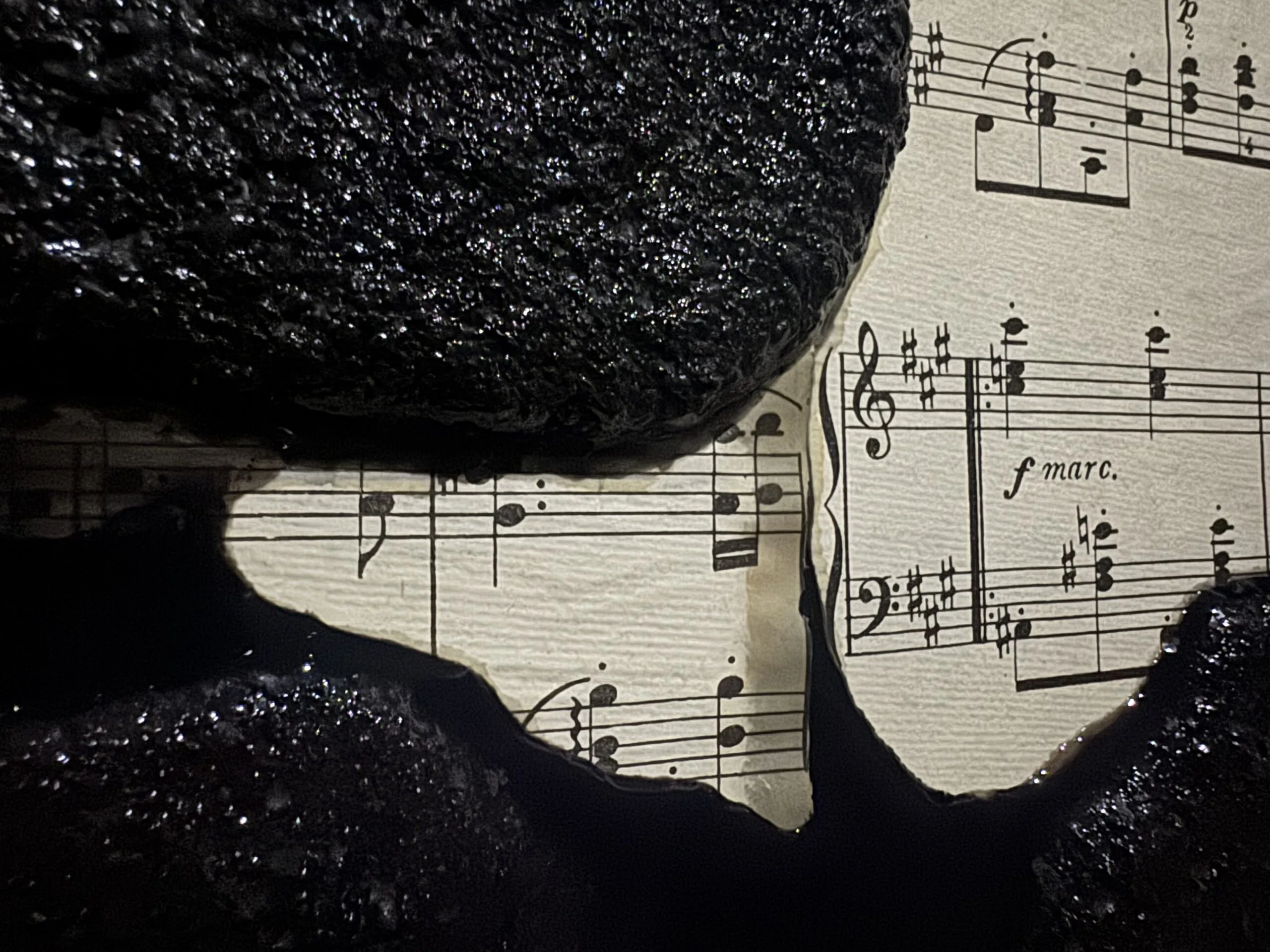
Über die Notenlinien hinweg breitet sich eine schwarze Substanz aus.
Es ist keine Farbe.
Sie verhält sich wie eine chemische Reaktion:
reißt auf, sickert, frisst sich in die Seite.
Sie bildet kein Gift ab —
sie verhält sich wie eines.
Ihre Bewegung über das Papier spiegelt die Bewegung des Schmerzes im Körper:
langsam, ungelöst, widerspenstig.
Und — wie in der romantischen Vorstellung, dass Kunst aus den flüchtigen, verwundbaren Zonen der Psyche entsteht —
beschreibt Fishman ihren Prozess als von einer Kraft geführt, die sie überkommt.
Wie ihre Gedichte einst „sich selbst schrieben“,
wie Bilder manchmal in Zuständen jenseits der Vernunft entstehen.
Ein Zustand gesteigerter Sensibilität, in dem die Realität zerfließt und nur das Werk bleibt.
„Werther und ich“ — der romantische Faden
Parallel zu diesem inneren Terrain taucht eine Zeile aus ihrer früheren Lyrik wieder auf:
ihr Gedicht „Werther und ich“ aus ihrem ersten Buch Inner Portrait (2024):
WERTHER UND ICH
wir tanzen
uns leidend ins Gelb
uns entzückend ins Blau
schießen Liebe
wie zwei Pistolen
sieh, sage ich zu ihm
wer hätte geglaubt
dass diese Nacht bereits
zweihundertfünfzig Jahre dauert
Das Gedicht ist nicht Teil der Ausstellung —
doch seine Sensibilität bildet das theoretische Rückgrat von REQUIEM.
Wie Werthers Sehnsucht verkörpert auch Fishmans Muse die romantische Spannung zwischen Nähe und Unmöglichkeit, Erleuchtung und Verletzung —
eine Muse, die zugleich schenkt und entzieht.
Das zweite Gedicht — der Beweis
Im Zentrum der Ausstellung erscheint ihr Gedicht aus OVERDOSE (2025):
OVERDOSE
hat mich nicht getötet.
alles, was er tat, war,
ein neues Monster zu erschaffen.
Es wurde nach der Serie Overdose geschrieben, die später in der Florence Biennale gezeigt wurde.
Schon damals glaubte sie, an einem Ende angekommen zu sein —
dass die Muse verschwunden sei, dass die Kraft zur Schöpfung versiegt sei.
In REQUIEM fungiert das Gedicht nicht als Interpretation, sondern als Beweis —
als Spur eines Schwellenmoments, der einst überschritten wurde, und nun erneut.
Der künstlerische Bogen — über Kontinente hinweg
Fishmans Werk bewegt sich über Kontinente und Disziplinen hinweg.
Sie ist die einzige israelische Künstlerin, die von der Toolip Art Gallery in Wien vertreten wird,
und sie ist ebenfalls bei der GR Kitano Art Gallery in Kobe, Japan, unter Vertrag, wo ihre Arbeiten permanent ausgestellt sind.
Ihre Werke wurden im Targa Museum (Spanien), im CICA Museum (Südkorea) gezeigt
und befinden sich in einer ständigen Sammlung in Dänemark.
Sie stellte solo in Tel Aviv aus und nahm an zahlreichen Ausstellungen in Europa teil.
Ihr künstlerisches Feld bewegt sich zwischen Poesie, Video-Art, Malerei, Performance und Kuration — und kehrt doch immer zu derselben inneren Achse zurück:
der Fähigkeit, extreme, verletzliche oder liminale Erfahrung in eine präzise visuelle Sprache zu verwandeln.
Bei Fishman ist die Wunde kein Thema.
Sie ist Material.
Wien — keine Eröffnung, sondern ein Ritual
Die Eröffnungsnacht von REQUIEM in Wien ist als Zeremonie konzipiert:
Die Galerie wird verdunkelt.
Hunderte Kerzen werden entzündet.
Mozarts Requiem wird live aufgeführt.
Gerichte, die er liebte, werden serviert.
Vertreter der Israelischen Botschaft in Österreich werden erwartet —
eine berührende Geste, die dem Abend eine zusätzliche kulturelle und menschliche Dimension verleiht.
In dieser stillen, leuchtenden Atmosphäre
stehen Fishmans Werke wie ein letzter Atemzug vor der Stille.
Das Ende — nicht symbolisch, sondern real
REQUIEM handelt nicht vom Tod Mozarts.
Es handelt von einer anderen Art von Tod:
dem möglichen Ende der kreativen Kraft, die sie getragen hat;
der leiser werdenden Stille nach zwei intensiven Jahren;
der Frage, ob dies das letzte Werk sein könnte,
bevor der Raum verstummt.
Ein Schwanengesang —
nicht als Metapher,
sondern als Wahrheit dieses Moments.

REQUIEM: SARI FISHMAN’S SWAN SONG
Some artists create from habit, others from discipline —
but Sari Fishman creates from rupture.
Her new exhibition, REQUIEM, opens at Toolip Art Gallery in Vienna exactly 234 years after Mozart’s death, and only 56 meters from the room where he wrote the final bars of his Requiem in D minor.
The proximity is not symbolic.
It is a frame — one that invites the viewer to consider how art is born at the edge of unraveling.
The shadow of Mozart — and the shadow that followed her
Mozart’s Requiem has always stood at the intersection of fact and myth.
Conflicting testimonies about his final days, unanswered questions about illness, speculation about poisoning, and the haunting reality that the work was left unfinished — all forged a mystery that history has not resolved.
This lingering ambiguity becomes the bridge into Fishman’s story.
She arrived in Vienna earlier this autumn to see her video-art work FEET, which was being shown at the gallery.
On her first night in the city, at the Imperial Hotel — where Queen Elizabeth once stayed and where Wagner lived for several months — she came into contact with an unknown substance.
Within seconds, her body reacted: lesions, burning pain, and a sudden collapse of sleep.
Weeks later — even as these words are written — the symptoms remain undiagnosed, unresolved, and untouched by any treatment that helps.
And the insomnia persists.
A modern mystery mirroring an old one.
The fading of a muse — the real axis of REQUIEM
Parallel to the physical unraveling came another erosion:
the quiet dimming of the muse that shaped Fishman’s work for the past two years.
In international profiles written about her, critics repeatedly drew comparisons to the Romantics —
to Petrarch’s Laura, to the untouchable axis of longing that shapes creation from afar.
Her muse has always functioned this way:
not as metaphor, but as an internal force — the tension of desire, impossibility, restraint, and the unreachable.
A presence that shaped her poetry, her video art, her painting cycles, her performances, and the poetry nights she founded.
A presence that pulled her toward creation with a force both illuminating and wounding.
But during the making of REQUIEM, that force began to fade.
Not disappear — but drift.
A distant light, slower to arrive, harder to catch.
And when a muse weakens, creation enters a threshold.
Here lies the emotional core of the exhibition:
REQUIEM is not about Mozart’s death — but about the possible death of the inner force that once sustained her.
Between Mozart and Bach — the public story and the secret truth
Although the exhibition moves around Mozart, the works themselves turn inward toward Bach.
Each piece is painted on Bach’s scores — childhood sheets she has kept since she first learned piano as a young girl.
Not out of nostalgia, but out of fidelity to what is real.
Mozart is the figure the world expects.
Bach is the figure she loves — the one she carries inside.
This choice is her hidden confession.
Her works are exhibited under Mozart’s name,
but they are created upon Bach’s music:
a private gesture the viewer can sense only through these words.
The black material — not paint, but behavior
Across the staves, a black substance spreads.
It is not paint.
It behaves like a chemical reaction: cracking, seeping, consuming the page.
It does not depict poison —
it behaves like one.
Its movement across the sheet mirrors the movement of pain in the body:
slow, unresolved, defiant.
And like the Romantic notion that creation emerges from the volatile spaces of the psyche,
Fishman describes her process as one led by a force that overtakes her —
the way her poems once wrote themselves, the way paintings sometimes arrive in states of unreason.
A zone of heightened sensibility where reality dissolves and only the work remains.
“Werther and I” — the Romantic thread
Alongside this emotional terrain, a line from her earlier poetry resurfaces:
her poem “Werther and I,” from her first book Inner Portrait (2024):
WERTHER AND I
we dance
agonizing into the yellow
rapturing into the blue
shooting love at one another
like two pistols
look, I say to him
who would have believed
this night has endured
for two hundred and fifty years
The poem is not part of the exhibition —
but its sensibility forms the theoretical backbone of REQUIEM.
Like Werther’s longing, Fishman’s muse embodies the Romantic tension between nearness and impossibility, illumination and injury.
A muse that both grants creation and withdraws from it.
The second poem — the evidence
At the center of the exhibition appears her poem from OVERDOSE (2025):
OVERDOSE
didn’t kill me.
all it did was
create a new monster.
The poem was written after creating the series Overdose, which later appeared in a solo exhibition at the Florence Biennale.
Even then, she believed she had reached the end —
that the muse had vanished, that creation had run its course.
In REQUIEM, the poem functions not as interpretation, but as evidence of a threshold crossed once before —
and felt again now.
The artistic arc — across continents
Fishman’s work spans continents and disciplines.
She is the only Israeli artist signed and represented by Toolip Art Gallery in Vienna,
and is also represented by GR Kitano Art Gallery in Kobe, Japan, where her works are permanently exhibited.
Her art has been shown at the Targa Museum (Spain), the CICA Museum (South Korea), and is held in a permanent collection in Denmark.
She has exhibited solo in Tel Aviv and participated in numerous exhibitions across Europe.
Beyond the biographical arc, Fishman has emerged as one of the most compelling multidisciplinary voices today.
Her practice moves between poetry, video art, painting, performance, and curation,
yet always returns to the same internal axis:
the transformation of extreme, vulnerable, or liminal experience into a precise visual language.
For Fishman, the wound is not a theme.
It is a material.
Vienna — not an opening, but a ceremony
The opening night of REQUIEM in Vienna is conceived as a ritual:
The gallery will be dark.
Hundreds of candles will be lit.
Mozart’s Requiem will be performed live.
Dishes he once loved will be served.
Representatives from the Israeli Embassy in Austria are expected to attend —
a moving gesture that adds a cultural and human dimension to the evening.
Within this quiet, luminous atmosphere,
Fishman’s works will stand like a final exhale before silence.
The ending — not symbolic, but real
REQUIEM is not about Mozart’s death.
It is about another kind of death:
the possible end of the creative force that carried her
the nearing quiet after two intense years
the question of whether this may be the last work
before the room goes still.
A swan song —
not as metaphor,
but as the truth of this moment.
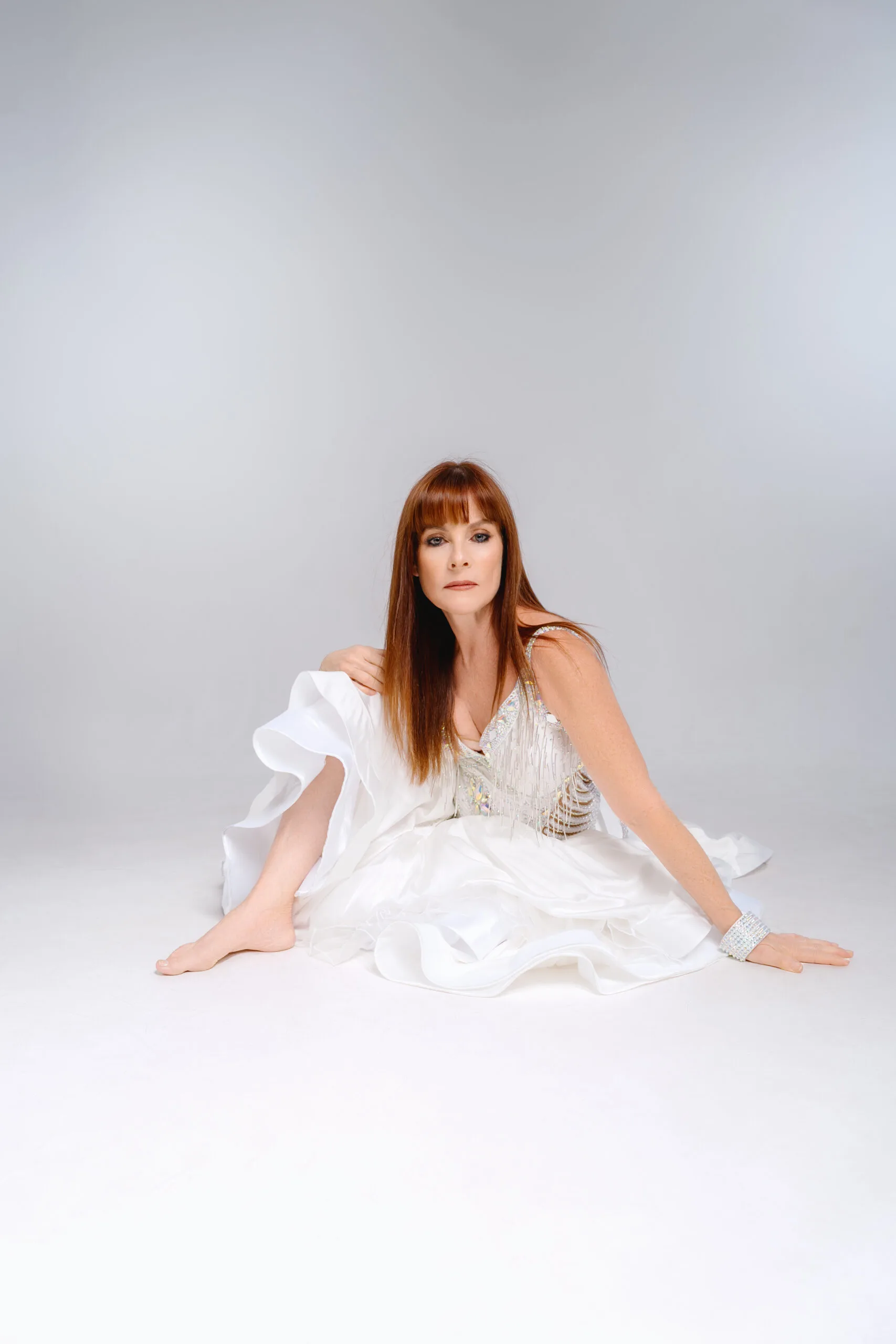
(Fotocredit: Diana Meir)